

How a Minnesota Manufacturer Used Solar to Take Control of Its Energy Costs

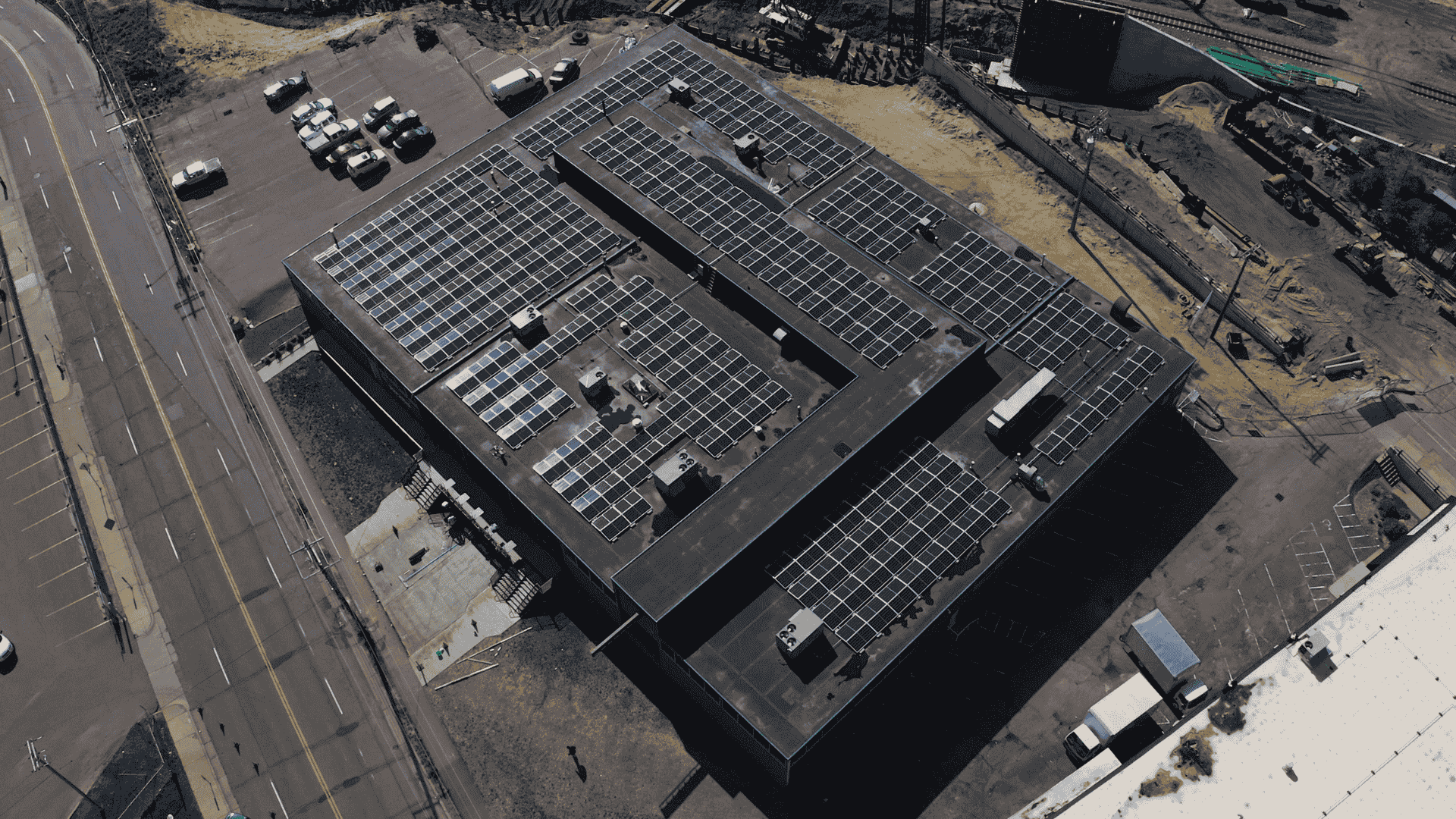
When Jackson Schwartz, CEO of Hennepin Made, decided to go solar, the decision wasn't complicated. "We use a ton of electricity," he said, "and Greenway helped us decide on a direction for maximizing our onsite generation using the sun within the code, government incentive programs, and technology selections."
Hennepin Made is a Minneapolis glass studio, and glass manufacturing is an energy-intensive process. The lights run long hours. Equipment draws continuously. The utility bill isn't a line item to optimize around the edges. It's a fundamental cost of doing business. Finding a smarter way to generate electricity wasn't a sustainability gesture. It was a business decision.
That same logic plays out across manufacturing operations throughout Minnesota. And as utility rates continue climbing, the math on commercial solar keeps getting clearer.
Key Takeaways
- Manufacturers and industrial operations are among the best candidates for commercial solar because of their high, consistent electricity demand during daylight hours
- On-site solar generation directly offsets the kilowatt-hours a facility would otherwise purchase from the grid at rising commercial rates
- When paired with battery storage, a solar system can also reduce demand charges, which are calculated on peak consumption and are often the largest single component of a commercial utility bill
- The federal Investment Tax Credit delivers a 30% base credit on commercial solar projects, with bonus adders that can raise the total to 40-50% for qualifying projects
- Commercial solar projects that begin construction by July 4, 2026 are eligible for the full credit under current IRS guidance
- Payback for commercial projects with the ITC is typically 5 to 7 years, followed by decades of lower and more predictable energy costs
Why Manufacturers Pay More for Electricity Than They Realize
Commercial and industrial facilities don't just pay for the electricity they consume. They pay for the peak moment of that consumption.
Most utility rate structures for commercial and industrial customers include demand charges, billed based on the highest 15-minute interval of power draw during the billing period. If a facility briefly spikes in the morning when equipment starts up, that single spike can set the cost ceiling for the entire month. For manufacturers with large, simultaneous loads, such as multiple machines, HVAC systems, and lighting all running at once, demand charges can represent a significant portion of the total utility bill.
On top of that, the underlying rate for electricity itself has been rising. The Minnesota Public Service Commission approved consecutive rate increases for Xcel Energy customers, adding up to a meaningful increase over just two years. That trajectory has not reversed. Every month a manufacturing facility runs entirely on grid power is another month absorbing costs it could be generating on-site instead.
This is the problem commercial solar is designed to solve. Not partially, and not theoretically. In the right setting, it solves it directly.
How Solar Works for a Manufacturing Facility
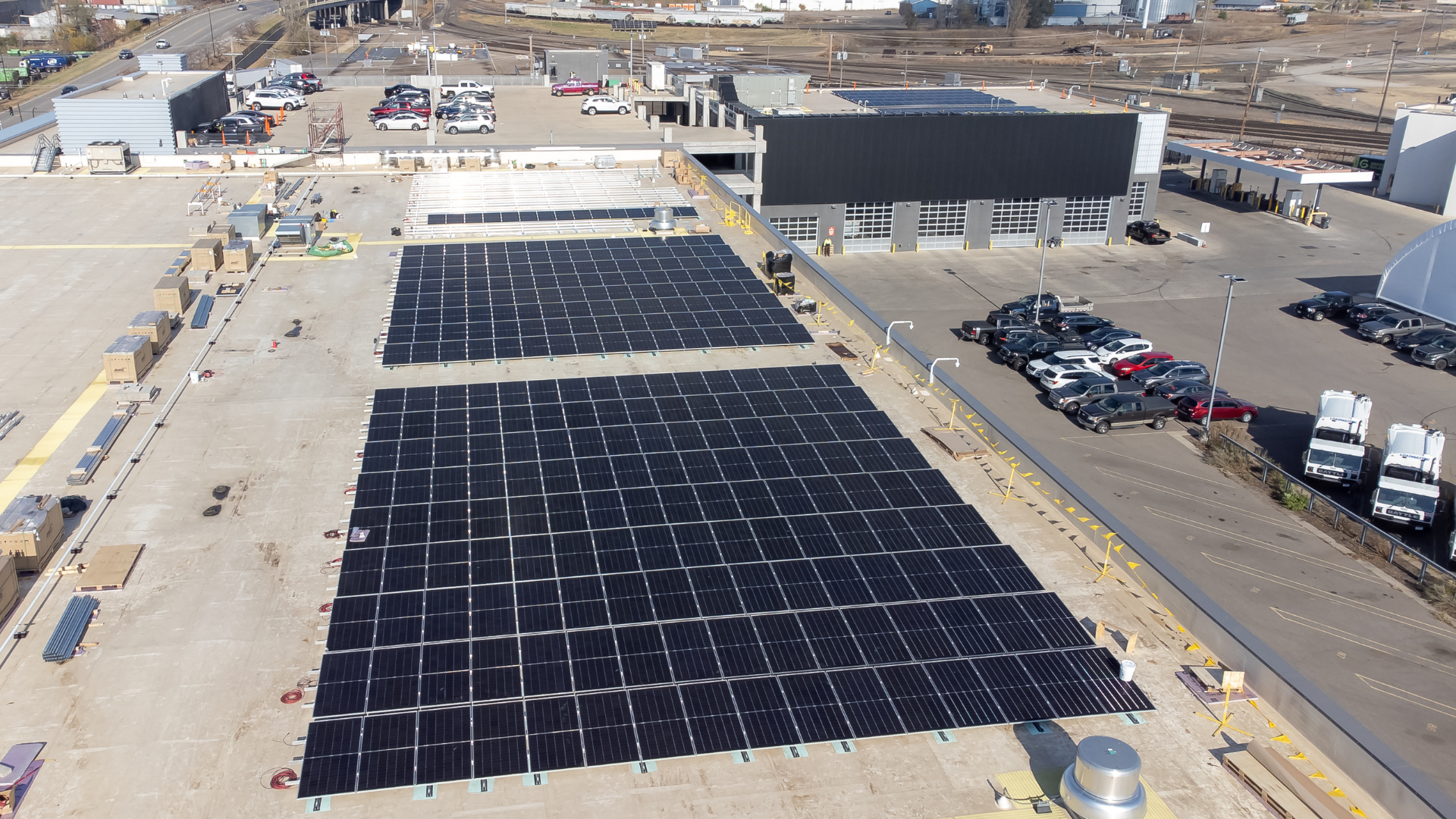
The logic is straightforward. A rooftop solar array (or a ground-mounted system, depending on the facility) generates electricity during daylight hours. That electricity flows directly into the building first before going anywhere else. Every kilowatt-hour generated on-site is one less kilowatt-hour purchased from the utility at commercial rates.
For manufacturers that run during the day, the alignment between solar production and facility load is nearly ideal. Production peaks in the morning and afternoon. Solar production peaks mid-morning through mid-afternoon. The offset is direct and immediate.
Several scenarios show how the combination of solar and storage deepens those savings:
- Solar alone reduces overall grid consumption during production hours, which lowers both energy charges and, when generation coincides with peak demand, contributes to demand charge reduction
- Adding battery storage allows the facility to charge during off-peak hours and discharge during the moments of peak load, directly flattening the spikes that drive demand charges
- With solar and storage working together, a facility can cut both the energy and demand components of its bill, which together represent the full cost exposure to rising utility rates
For a facility like Hennepin Made, where electricity consumption is high and consistent, on-site generation isn't a marginal benefit. It's a fundamental change in how the building is powered.
We've seen the same dynamic at Fulton Brewing, where we installed a 310 kW commercial system under a tight winter timeline. As CEO Ryan Petz put it: "They went the extra mile to ensure we hit a year end deadline. They have impressed me with their taste in beer and their commitment to helping us improve our environmental impact."
If you want to understand more about how demand charges affect the commercial energy bill, our breakdown of demand charges for Minnesota businesses goes deeper on the mechanics.
The ITC Window That Changes the Financial Case
For commercial solar, the Investment Tax Credit changes the financial picture substantially. The base credit is 30% of the total system cost, applied directly against federal tax liability. Bonus adders for domestic content and energy community siting can raise the effective credit to 40-50% for qualifying projects.
That credit applies to the full installed cost of the system, which means it reduces the effective capital outlay before any energy savings begin. For manufacturing facilities with meaningful tax liability, the ITC can compress the payback period significantly. With the credit, payback for commercial projects is typically 5 to 7 years. Then the facility generates lower-cost electricity for the remaining life of the system.
The deadline matters here. Projects must begin construction by July 4, 2026, under the Physical Work Test to qualify for the full credit under current IRS guidance. For a manufacturing facility, "beginning construction" means demonstrable physical work of a continuous nature. Groundbreaking, foundation work, racking installation, or off-site fabrication of custom components all qualify. The IRS audits these claims, and documentation is critical.
Given typical project timelines, which include feasibility, design, permitting, and installation, manufacturers evaluating solar today have limited runway to meet that deadline and capture the full credit.
Consult your tax advisor. Based on current IRS guidance under Sections 48/48E.
We covered the ITC deadline in detail, including what "beginning construction" actually requires, in our guide to locking in the commercial solar tax credit.
What Makes a Manufacturing Facility a Strong Solar Candidate
Not every roof is the right fit, and not every facility has the same opportunity. The factors that most influence how well solar performs for a manufacturer include:
- Load profile. Facilities that run during daylight hours see the most direct offset between solar production and energy consumption.
- Roof or land availability. Rooftop systems work well for flat commercial roofs. Ground mounts are an option when footprint allows.
- Utility rate structure. Facilities on commercial rates with demand charge components gain the most from pairing solar with storage.
- Tax liability. The ITC is a tax credit, not a grant. Facilities with sufficient tax liability to absorb it capture the full benefit directly.
Greenway works with manufacturers, architects, general contractors, and engineers to design systems that fit the operational and physical realities of each building. We run every project with our own direct employees and NABCEP-certified team, with no subcontractors. That matters on industrial sites, where coordination, sequencing, and safety standards are non-negotiable.
What Happens After the System Is Running
The savings don't stop at installation. On-site solar locks in a portion of a facility's energy supply at a known cost for the life of the system. As utility rates continue rising, the value of that fixed-cost generation grows each year.
For manufacturers with specific sustainability goals, an on-site solar system also provides a clean, verifiable source of data. Every kilowatt-hour generated on-site is a kilowatt-hour not purchased from the grid, with a directly traceable emissions reduction. That data is useful for reporting purposes, for vendor and customer relationships that have sustainability requirements, and for internal tracking against stated goals.
Mark Anderson, CEO of Impact Marketing, said it well: "I interviewed a dozen solar companies before choosing Paul and Greenway. They have followed through on every commitment and I am in the process of installing my 2nd system with them. I am an advocate of them as people and of their company as someone to be trusted and leveraged when it comes to renewable energy."
That kind of relationship, built on accurate production estimates and honest project management, is what drives return customers. It is the only metric we measure success by.
For manufacturers considering solar as part of a broader operational upgrade, our post on how solar and storage work together for peak shaving walks through the demand charge side of the equation in more detail.
FAQs
Does commercial solar actually make financial sense for a smaller manufacturer?
Yes, for the right facility. The key variables are daytime energy consumption, utility rate structure, available roof or land area, and tax position. A manufacturer running production during daylight hours, on a commercial rate with demand charges, and with meaningful tax liability to apply the ITC against is a strong candidate. The 5 to 7 year payback with the credit is achievable for many mid-size industrial facilities in Minnesota.
What does "beginning construction" actually mean for the ITC deadline?
The IRS defines beginning construction under the Physical Work Test as significant physical work of a continuous nature. For a commercial project, this could mean groundbreaking, structural racking installation, or the start of off-site fabrication of custom components. It requires documentation and demonstrable continuity of effort. Consulting a tax advisor before relying on this test for credit eligibility is essential.
Can solar address demand charges, or just energy consumption?
Solar alone can reduce demand charges when generation coincides with a facility's peak consumption windows. Adding battery storage takes this further by allowing the facility to discharge stored energy during peak moments, flattening the spikes that drive demand charge calculations. The combination of solar and storage is the most effective approach for facilities where demand charges represent a significant share of the utility bill.
What is Greenway's experience with manufacturing and industrial installations?
We have installed commercial systems for manufacturing and industrial clients across Minnesota, including Hennepin Made, Fulton Brewing, and SunOpta. Our team is NABCEP-certified, we use no subcontractors, and we manage the full project scope from feasibility and permitting through interconnection and ongoing support.
How long does a commercial solar project typically take from first call to energization?
Commercial project timelines vary based on system size, roof complexity, permitting requirements, and utility interconnection. Planning for several months from initial engagement to energization is realistic for most commercial installations. Given the July 4, 2026 ITC deadline, facilities evaluating solar now should begin the process promptly to allow sufficient time for design, permitting, and construction commencement.
If your facility runs on significant electricity and you've been watching your utility bills climb, solar may be worth a direct look at your numbers. We'd welcome the chance to run a feasibility assessment for your building. Reach out at Info@GreenwaySolar.org or call (612) 416-1518 to start a conversation.
Fill out our client inquiry form today, so we can reach out and help you start taking advantage of the many benefits of solar!
Here at Greenway, we believe in solar for all. For homeowners, we install standard solar panels, EV chargers, battery storage, and the SPAN panel. We are also a certified installer of the Tesla Solar Roof and Powerwall. If you don’t own a home but want the benefits of solar, then subscribing to one of our three community solar gardens might be right for you.
Certified to Install:


More to Read
More posts are coming soon! Sign up using the form below to be notified.

Your Electric Bill Went Up and You Didn't Use More Power. Here Is Why.

Here's How Commercial Solar Systems Are Actually Sized in Minnesota
The Difference Between a Solar Installer and a Solar Partner
Get Greenway Updates in Your Inbox.
Enter your email to receive notifications of new posts.