

How Solar Carports Turn Commercial Parking Lots Into Energy-Producing Assets

When a business owner asks about commercial solar, the conversation almost always starts with the roof. How much space is available? What direction does it face? Can the structure support panels?
But for many commercial buildings, the roof is not the best option. It may be too old, structurally limited, cluttered with HVAC equipment, or locked into a lease that restricts modifications. Some buildings have flat roofs with heavy shade from neighboring structures. Others simply do not have enough square footage to offset the building's energy consumption.
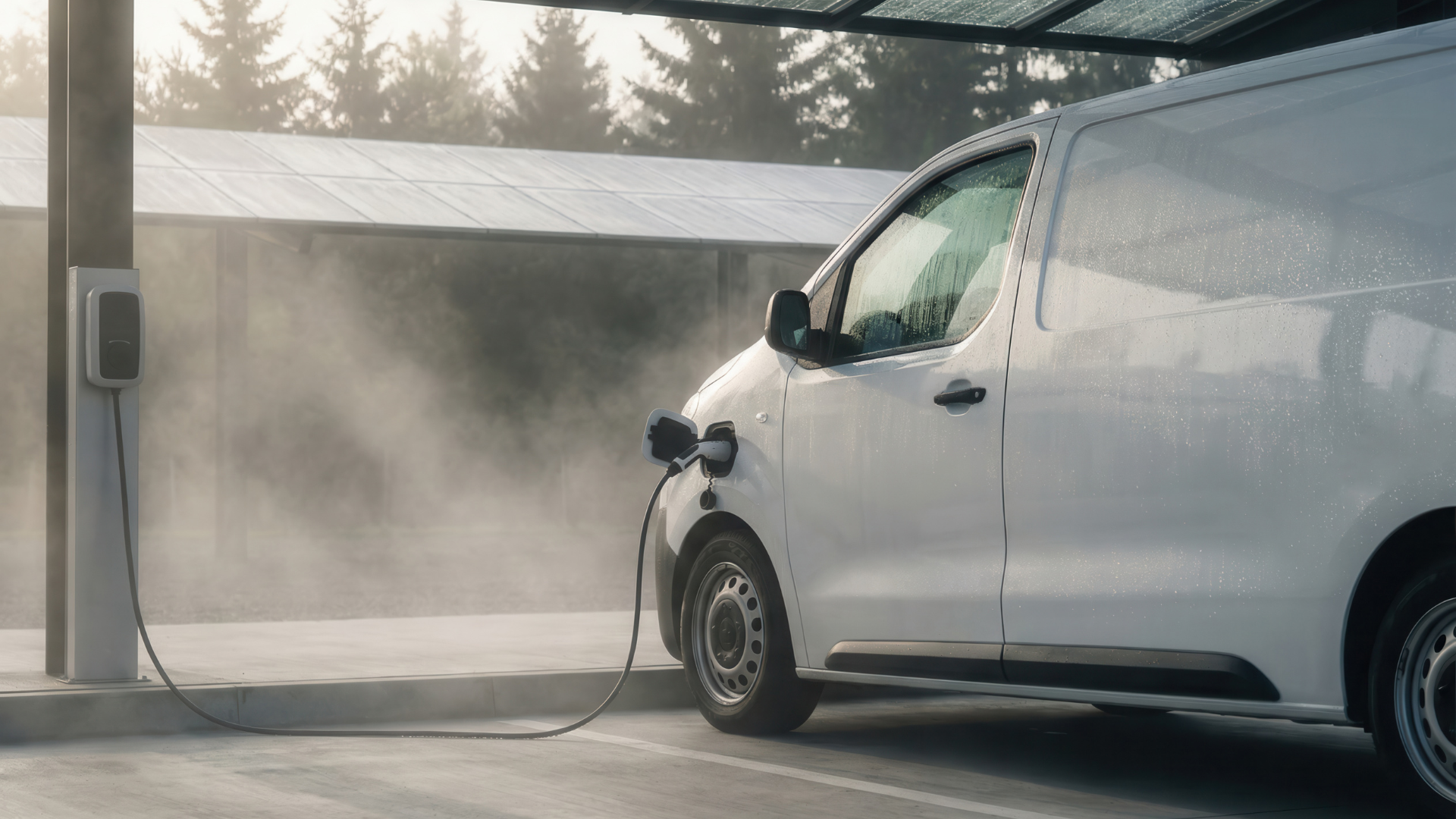
The parking lot rarely has those problems. It's open, it's already built, and for most of the day it's doing nothing more than holding cars. A solar carport turns that underused space into a working energy asset, generating electricity, shading vehicles, and creating a natural integration point for EV charging and battery storage.
Key Takeaways
- Solar carports generate clean electricity from existing parking areas without requiring any rooftop modifications
- They provide covered parking that protects vehicles from sun, rain, hail, and snow, an amenity employees and customers notice
- Carport panels can be oriented for optimal solar production regardless of building direction, often outperforming rooftop systems constrained by roof angle
- Solar carports integrate naturally with EV charging and battery storage, creating a multi-purpose energy hub
- Greenway delivers commercial carport systems as part of its turnkey project process, from feasibility through interconnection
Why the Roof Is Not Always the Answer
Not every commercial building is a good candidate for rooftop solar. Some of the most common reasons include:
- Structural limitations. Older buildings or certain construction types may not support the added weight of panels and racking without expensive reinforcement.
- Roof condition. If a roof has fewer than 15 years of life remaining, installing solar on top of it creates a future problem. Removing and reinstalling panels during a roof replacement adds cost and downtime.
- Obstructions and shade. Rooftop HVAC units, vents, skylights, and elevator penthouses reduce usable area. Shade from taller neighboring buildings can further limit production.
- Lease restrictions. Tenants in leased commercial spaces may not have the authority to modify the roof, even if the building owner is open to solar.
In all of these situations, the parking lot becomes the more practical and often more productive option.
If you are dealing with roof questions and want to understand the broader picture, Greenway's roof-ready checklist for commercial buildings covers the structural and design factors that determine whether rooftop solar makes sense for your facility.
What a Solar Carport Actually Does
A solar carport is an elevated steel or aluminum structure built over parking spaces, with solar panels mounted on top. The structure is engineered to meet local building codes for wind, snow, and load requirements, and the panels function identically to any other solar installation, converting sunlight into electricity that powers the building.
What makes carports different is the flexibility they offer:
- Optimal orientation. Unlike rooftop panels that are limited by the direction and pitch of the existing roof, carport panels can be angled and oriented for maximum solar production. This means the system can generate more energy per panel than a rooftop installation on a less-than-ideal roof.
- Dual use of space. The parking lot continues to function as parking. Vehicles get covered, shaded parking while the canopy above generates electricity. In Minnesota, that shade also protects vehicles from hail, snow, and ice.
- EV charging integration. Solar carports are the natural location for commercial EV chargers. The electrical infrastructure is already there, the chargers sit where vehicles park, and the solar production can directly offset the charging load. For businesses planning to add EV charging, designing the carport and chargers together avoids the costly demand charge spikes we covered in our blog on how commercial EV charging and solar work together.
- Easier maintenance access. Panels on a carport are accessible from ground level, making inspection, cleaning, and maintenance simpler and safer than rooftop systems.
Who This Makes Sense For
Solar carports are a strong fit for several types of commercial properties in Minnesota:
- Retail centers and shopping areas with large parking lots that sit empty or underused during off-hours. Covered parking is also an amenity that attracts customers.
- Office parks and corporate campuses where employee satisfaction matters and visible sustainability commitments strengthen brand reputation.
- Warehouses and distribution centers with expansive parking areas but limited rooftop suitability due to lightweight construction or low load capacity.
- Medical facilities and clinics that need to cover patient parking and have the energy demand to justify the investment.
- Any leased commercial building where the tenant cannot modify the roof but has access to the parking area.
Greenway designs commercial carport systems as part of the same turnkey process used for rooftop and ground-mount installations. The scope includes feasibility assessment, structural engineering, permitting, installation, interconnection, and incentive management, all handled by our NABCEP-certified, direct-employee team with no subcontractors.
The Financial Case
Solar carports typically cost more upfront than rooftop systems because the structure itself (steel frame, foundation, engineering) adds to the investment. But the financial case is still strong, especially in Minnesota.
- Minnesota's property tax exemption means the value a solar carport adds to your property does not increase your tax bill. As we covered in our blog on how solar increases commercial property value, this is a significant advantage.
- Minnesota's sales tax exemption reduces the upfront cost of solar equipment before any federal credits are applied.
- The federal ITC delivers a 30% base credit on commercial solar, with bonus adders that can push the total higher. This applies equally to carport installations. Projects must begin construction by July 4, 2026. Consult your tax advisor. Based on current IRS guidance under Sections 48/48E.
- Better production potential. Because carport panels can be optimally oriented, they often produce more energy per panel than rooftop systems on poorly oriented roofs, improving the long-term return.
When you factor in the energy savings, demand charge reduction (especially with integrated storage), EV charging capability, and the dual-use value of covered parking, the ROI story for carports often closes the gap with rooftop systems.
FAQs
Are solar carports more expensive than rooftop solar?
Yes, upfront costs are higher due to the structural frame, foundation, and engineering. But the total ROI accounts for energy savings, tax incentives, dual-use of space, better panel orientation, and lower maintenance access costs. For buildings where rooftop solar is not feasible, carports are often the most practical path forward.
Can a solar carport withstand Minnesota winters?
Yes. Commercial solar carports are engineered to meet local building codes for wind and snow loads. The steel or aluminum structures are designed for the specific conditions at your site, including Minnesota's heavy snow and ice.
Can I add EV chargers to a solar carport?
Absolutely. Solar carports are the ideal location for EV charging because the electrical infrastructure is already in place and the chargers sit exactly where vehicles park. Designing the carport and chargers together avoids the demand charge spikes that come from adding chargers without a load management strategy.
Does Greenway build solar carports?
Yes. Greenway designs and installs commercial solar carports as part of our scalable commercial offerings, which include rooftop arrays, carports, and ground-mount systems. Our team handles everything from feasibility and structural engineering through permitting, installation, and interconnection.
If your building's roof is not the right fit for solar but you have parking space that's sitting idle, we would be glad to look at what a carport system could do for your business. Reach out at Info@GreenwaySolar.org or call (612) 416-1518.
Fill out our client inquiry form today, so we can reach out and help you start taking advantage of the many benefits of solar!
Here at Greenway, we believe in solar for all. For homeowners, we install standard solar panels, EV chargers, battery storage, and the SPAN panel. We are also a certified installer of the Tesla Solar Roof and Powerwall. If you don’t own a home but want the benefits of solar, then subscribing to one of our three community solar gardens might be right for you.
Certified to Install:


More to Read
More posts are coming soon! Sign up using the form below to be notified.

Your Electric Bill Went Up and You Didn't Use More Power. Here Is Why.

Here's How Commercial Solar Systems Are Actually Sized in Minnesota
The Difference Between a Solar Installer and a Solar Partner
Get Greenway Updates in Your Inbox.
Enter your email to receive notifications of new posts.