

Commercial Solar's Expiring Tax Credit: What Minnesota Businesses Need to Do Now

Solar has probably come up in a few budget conversations at your company. Maybe someone got a quote. Maybe it is on the list for "next year." Maybe the plan is to revisit it when things slow down.
Here is the problem: there is now a deadline, and it is closer than most people realize.
The federal Investment Tax Credit for commercial solar is still available at 30%, with bonus adders that can push the total to 40% or even 50%. But the rules changed in 2025, and the timeline got a lot tighter. If you want the full credit, your project needs to begin construction by July 4, 2026, or be completely finished by the end of 2027.
That sounds like plenty of runway. It is not.
Key Takeaways
- The 30% commercial ITC (with potential for 40% to 50% with bonus adders) requires construction to begin by July 4, 2026, or the system must be operational by December 31, 2027.
- "Beginning construction" has specific IRS requirements that take time to meet.
- Commercial solar projects typically take 6 to 12 months from first conversation to operational system.
- Permitting, equipment procurement, and utility interconnection take longer than most businesses expect.
- Starting now gives you flexibility. Starting mid-2026 means hoping nothing goes wrong.
What Changed
The residential solar tax credit expired at the end of 2025. Homeowners who did not get systems installed by December 31 missed it entirely. However, state-level sales and property tax exemptions are still available - now’s the perfect time to explore your savings potential. Contact Greenway Solar today for a personalized consultation.
The commercial credit is still around, but it now has hard deadlines.
Path 1: Begin construction by July 4, 2026. If you hit this milestone, you have four years to complete the project and still claim the full credit. This gives you four full years to finish construction while still claiming the full credit, meaning you can secure your credit eligibility in 2026 and execute installation when it best fits your schedule and cash flow.
Path 2: Have the system fully operational by December 31, 2027. This is the fallback if you miss the July 2026 start date.
Miss both, and the credit goes away for your project.
What "Begin Construction" Actually Means
The IRS is specific about this. Signing a contract does not count. Talking to a solar company does not count.
The IRS recognizes two methods to begin construction and preserve the full credit. Which path makes sense depends on your timeline, budget cycle, and project specifics.
Physical Work Test: Actual construction activity of a significant nature begins at your site, or at a factory manufacturing equipment specifically for your project. Site clearing and planning do not count.
Five Percent Safe Harbor: You pay at least 5% of total project cost toward equipment or other qualifying expenses, and you keep making continuous progress toward completion. This is often the fastest and most reliable path for most clients because it locks in the full credit with no on-site work required and provides a multi-year grace period to complete the project. Important note: As of August 2025 IRS guidance, the 5% Safe Harbor is only available for solar projects of 1.5 MW AC or smaller. Larger commercial systems must use the Physical Work Test, which requires actual construction activity of significant nature.
Recent Treasury guidance has tightened enforcement. Placing a deposit and hoping for the best is riskier than it used to be. Documentation matters, and IRS audits are common.
How Long Commercial Solar Actually Takes
This is where the timeline gets uncomfortable.
Most business owners assume solar is a few-month project. The reality is more like 6 to 12 months for a commercial installation. Here is how it breaks down:
Weeks 1 to 4: Site assessment, energy analysis, system design, financial modeling. You get a proposal and decide whether to move forward.
Weeks 5 to 8: Contract signed. Detailed engineering begins. Structural analysis confirms your roof can handle it.
Weeks 9 to 14: Permitting. This is where timelines vary wildly. Some jurisdictions take two weeks. Some take three months.
Weeks 10 to 16: Equipment procurement. Panels, inverters, racking, electrical components. Lead times depend on supply chain conditions.
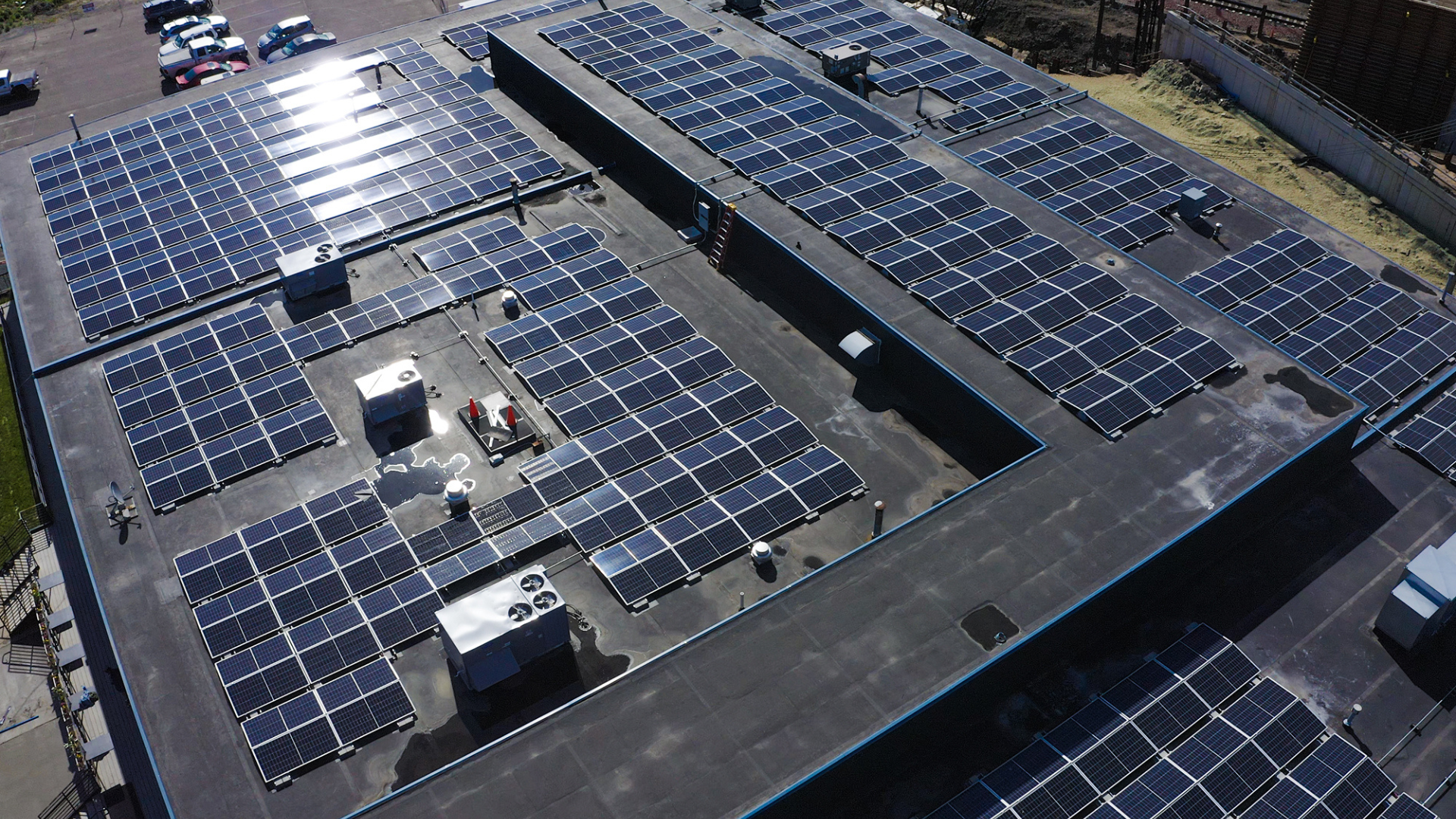
Weeks 15 to 20: Installation. Actual construction. A 100 kW rooftop system might take a couple weeks of active work.
Weeks 20 to 26: Inspection and utility interconnection. Local inspectors sign off. The utility reviews everything and approves grid connection. This step often takes longer than people expect.
Week 26 and beyond: Permission to operate. System goes live.
Best case: six months. Bigger projects or slow jurisdictions: closer to a year.
Do the Math Backwards
If you start conversations in January 2026, you might sign a contract in February, get permits by May, and begin construction in June. That barely makes the July 4 deadline.
If permitting takes longer than expected, or equipment gets delayed, or the utility drags its feet, you miss the safe harbor window. Now you have to complete everything by December 2027.
If you start in April 2026, you are almost certainly relying on the December 2027 deadline. Any delay puts the entire credit at risk.
If you start now, you have room to maneuver. You can aim for the July 2026 construction milestone with time to spare. Or you can proceed at a normal pace knowing you will comfortably make December 2027.
Starting now means you pick the timeline. Starting later means the timeline picks you.
What Missing the Deadline Costs
On a $300,000 commercial system, the base 30% tax credit is worth $90,000. With the full ITC, commercial solar projects in Minnesota typically achieve payback in 5 to 7 years. Without the credit, that extends to 10 to 15 years, significantly reducing ROI and making other capital investments more competitive.
Add depreciation benefits and the total federal tax value can exceed $120,000. Solar still makes financial sense without the credit. Energy savings over 25 years are real. But without the ITC, the payback period stretches out and the return on investment drops.
There is no partial credit for getting close. The deadlines are hard.
The Real Value: More Than Just 30%
Most businesses think the credit stops at 30%. It does not. Qualifying commercial projects can stack additional bonuses to reach 40% to 50% in total federal tax credits.
Here is how it works:
Base 30% ITC is available to all qualifying commercial solar projects that meet the deadline requirements.
+10% Domestic Content Bonus is an additional credit if your project uses solar panels, inverters, and steel that meet U.S. manufacturing thresholds. The IRS has specific percentage requirements for domestically produced components.
+10% Energy Community Bonus applies to projects located in qualifying areas. Eligible sites include former coal communities, brownfield sites, and areas with historical fossil fuel employment or significant local tax revenue from fossil fuel extraction.
Prevailing Wage and Apprenticeship Requirements apply to projects over 1 MW AC. Meeting prevailing wage standards and apprenticeship ratios is required to claim the full base 30% rate. Otherwise the base drops to 6%.
In Minnesota, portions of the Iron Range and areas with historical mining and fossil fuel employment may qualify for the Energy Community bonus. We evaluate every project for maximum credit eligibility.
The difference is substantial. On a $400,000 commercial system, the base credit is $120,000 (30%). With bonus adders, that jumps to $160,000 to $200,000 (40% to 50%).
Financing Options: You Do Not Need Cash Upfront
For businesses without enough tax liability to use the full credit in one year, the ITC can be transferred (sold) to other taxpayers for cash, typically at 90% to 95% of face value. This means even non-profits, startups, or businesses with limited tax liability can monetize the incentive immediately.
Do not have capital budget for solar? Power Purchase Agreements (PPAs) and leases allow you to install solar with zero upfront cost. You simply buy the power at a lower rate than your utility. The ITC benefits are captured by the financing partner and passed through as lower energy rates. We can walk through all financing structures to find what works for your business.
Beyond the Tax Credit
Beyond immediate tax benefits and energy savings, commercial solar enhances property value, attracts sustainability-conscious tenants, and helps meet corporate ESG commitments. These are advantages that matter increasingly to investors, customers, and stakeholders.
Installer Capacity Is Not Unlimited
When the residential deadline approached in late 2025, the market flooded with homeowners trying to get systems installed before December 31. Installers were booked solid. Wait times stretched to months. Some people missed the deadline simply because they could not get on the schedule.
Commercial solar will see the same pattern as July 2026 and December 2027 approach. Businesses that wait compete for limited installer capacity. Lead times extend. Equipment availability tightens.
Starting early means getting priority scheduling and predictable timelines.
What We Are Telling Clients
We are encouraging commercial clients to begin the process now, even if actual installation is planned for later in 2026.
Starting early gives you time to assess your site and model the financials without pressure, work through internal approvals and budget cycles, reserve a spot on our installation calendar, and build in margin for the unexpected.
The deadlines are real, and the timeline is tighter than most businesses realize.
We guide Minnesota commercial clients through every step, from ITC eligibility analysis and optimal begin-construction strategy to permitting, installation, and documentation for IRS compliance.
Have questions about where your project stands? Fill out our client inquiry form or call us at (612) 416-1518. We can walk through your timeline and help you figure out the right approach.
Disclaimer: Actual tax benefits vary based on individual tax situations. Consult a tax professional for guidance specific to your business.
Fill out our client inquiry form today, so we can reach out and help you start taking advantage of the many benefits of solar!
Here at Greenway, we believe in solar for all. For homeowners, we install standard solar panels, EV chargers, battery storage, and the SPAN panel. We are also a certified installer of the Tesla Solar Roof and Powerwall. If you don’t own a home but want the benefits of solar, then subscribing to one of our three community solar gardens might be right for you.
Certified to Install:


More to Read
More posts are coming soon! Sign up using the form below to be notified.

Your Electric Bill Went Up and You Didn't Use More Power. Here Is Why.

Here's How Commercial Solar Systems Are Actually Sized in Minnesota
The Difference Between a Solar Installer and a Solar Partner
Get Greenway Updates in Your Inbox.
Enter your email to receive notifications of new posts.